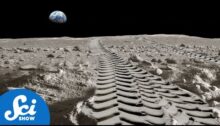
We Don’t Know Why Astronauts Get Motion Sick

From SciShow Space. A majority of modern astronauts experience any one of a suite of symptoms scientists collectively call Space Motion Sickness, or SMS. But despite knowing about it for nearly as long as humans have gone into space, we still don’t know exactly what causes it, or how to predict which astronauts might lose…
Dividing by zero on a water computer from 1940

From Atomic Frontier. šŸŒŽ Get Exclusive NordVPN deal here āž”ļø https://nordvpn.com/atomicfrontier It’s risk-free with Nord’s 30-day money-back guarantee!ā˜ļø I went to Cambridge to revive a water computer that once modelled the British Economy. ———- II ———- This video was brought to you by an unhealthy amount of coffee and our awesome Patrons at https://www.patreon.com/atomicfrontier. 0:00…

The Biggest Star In The Universe Is Too Small

From SciShow Space. R136a1 is the most massive star that astronomers have ever discovered. It’s so massive you might think the laws of physics wouldn’t allow it. But it turns out that its current mass estimate is actually so low that it threatens our understanding of how the universe got to be where it is,…

JWST: Looking Beyond The Pretty Pictures

From SciShow Space. The James Webb Space Telescope isn’t just for finding Pinterest worthy pictures, we’re finding some amazing details in the sometimes blurry background photos. Hosted by: Savannah Geary (they/them) ———- Huge thanks go to the following Patreon supporter for helping us keep SciShow Space free for everyone forever: Jason A Saslow, David Brooks,…

Is Our Solar System Missing Moons?

From SciShow Space. You might be pretty confident that when a moon is there it’s there to stay, but that’s not always the case. Moons may have a history of disappearing. Hosted by: Savannah Geary (they/them) Correction: 05:19 Well, this is half right. The moons don’t actually orbit the same distance from Mars and orbit…

The Future of the Search for Life

From SciShow Space. Get 50% off your SciShow Space calendar today by heading to https://complexlycalendars.com/products/scishowspace Astronomers have found more than 5,000 planets in the last three decades, but that’s not nearly as exciting as potentially coming across the first extraterrestrial creatures. And we may finally be in a position to make that discovery. Hosted by:…

Eavesdropping On Other Worlds

From SciShow Space. We usually only get to use our sense of sight in exploring the universe, but that hasn’t prevented scientists from trying to listen in. Hosted by: Hank Green (he/him) ———- Huge thanks go to the following Patreon supporter for helping us keep SciShow Space free for everyone forever: Jason A Saslow, David…

Atlas: The Little Rocket That Still Can

From SciShow Space. Order your SciShow Space Pinboard and all SciShow merch here: https://dftba.com/scishow In 1962, John Glenn went into orbit on an Atlas rocket, and thus began a family of rockets that lasted for 60 years! Hosted by: Hank Green (he/him) ———- Huge thanks go to the following Patreon supporter for helping us keep…

chasing a rare January tornado outbreak (4K)

From styro_drake. NoT FoR rEbRoAdCaSt Extremely rare and beautiful January tornadoes in Illinois. 0:00 introduction 1:32 first storms fire 2:54 tornado warning and first tornadoes 4:40 under the mesocyclone 6:24 new tornado 8:11 close range of tornado hitting Maroa, IL 10:27 anticyclonic funnel cloud I’ve been waiting for years for a good cold core tornado…

What’s Going to Space in 2023?

From SciShow Space. 2022 was a pretty exciting year for space science, but what news might we expect in the coming year? Hosted by: Savannah Geary (they/them) ———- Huge thanks go to the following Patreon supporter for helping us keep SciShow Space free for everyone forever: Jason A Saslow, David Brooks, and AndyGneiss! Support SciShow…